
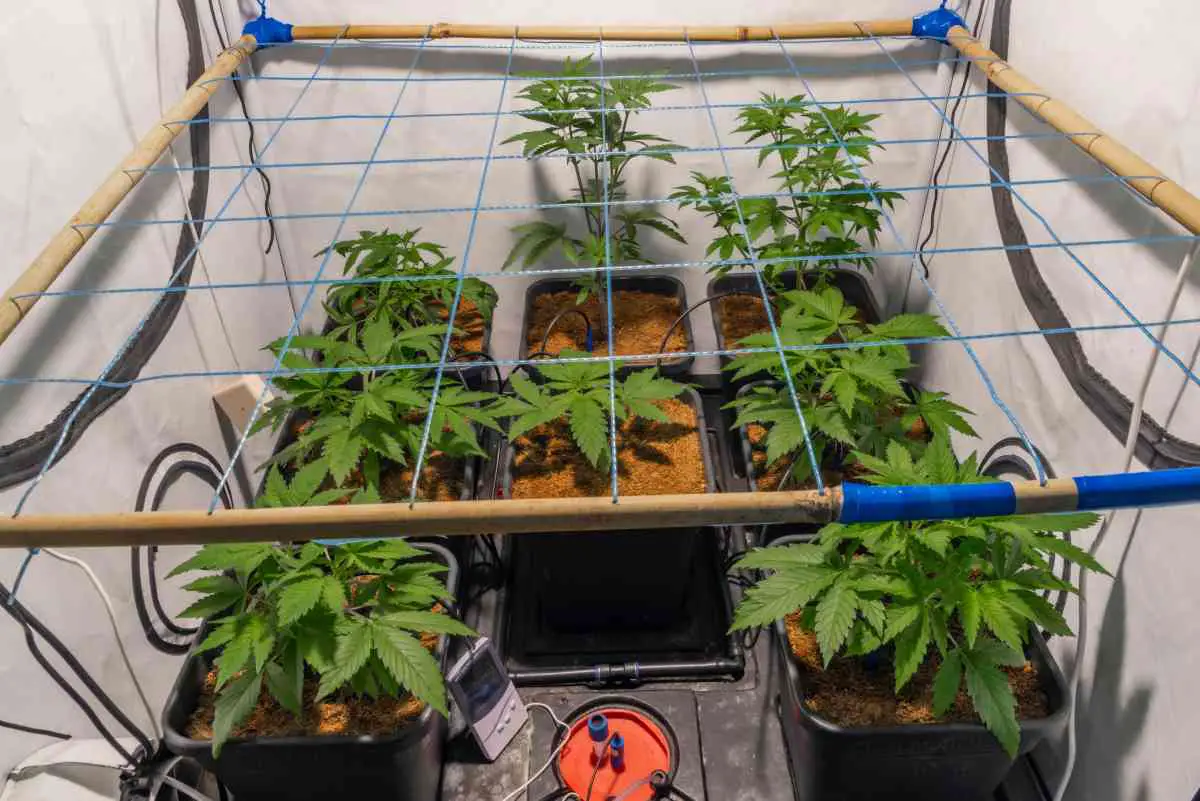
Quick Answer: A 4×4 grow tent (16 square feet) can hold between 1 and 16 plants depending on training method and pot size. For most home growers, 4 to 6 plants with topping or low-stress training gives the best balance of yield, manageability, and airflow. Sea of Green setups can push to 8 to 16 small plants, while large untrained plants in big pots may only fit 1 to 2.
The first time I filled a 4×4 tent, I crammed in eight pots because the tent looked huge when it was empty. Two weeks into flower, the canopy had become an impenetrable wall of leaves, airflow stopped reaching the lower third of every plant, and I spent the next month fighting humidity pockets that led to mold on two colas. The tent was never too small. I had simply put too many plants in it for the training method I was actually using.
The honest answer to “how many plants fit in a 4×4” depends entirely on what you do with each plant, not on the tent’s square footage alone. This guide breaks down every realistic configuration, what to expect from each, and how to choose the right number for your specific goals.
Table of Contents
The Short Answer: It Depends on Method
You can grow between 1-16 plants in a 4×4 tent, depending on your planting methods and strains. That range is wide enough to be almost unhelpful on its own, but it becomes useful once you map specific training methods to specific plant counts.
For photoperiod plants, a 4×4 tent works well if you are growing 4 to 6 plants and using training methods to control their size. A 4×4 tent is great for 4 to 8 plants, but a 3×3 tent might be better if you are looking for a compact grow with fewer plants. These middle-ground numbers represent what most home growers settle on after a cycle or two of experimentation.
Plant Count by Growing Method
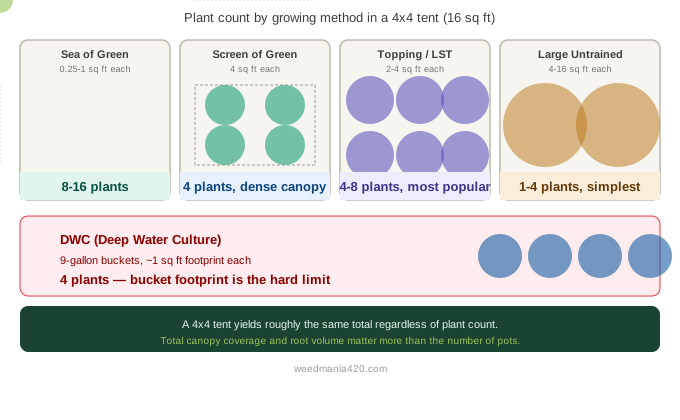
Sea of Green (SOG): 8 to 16 plants
The Sea of Green method packs many small plants close together and forces them into flower early, before they develop large individual canopies. The compact positioning of plants within a smaller surface leads them to grow together and form a canopy of buds.
A Screen of Green setup needs only about 0.25 square feet of space per plant, which is how the count climbs toward the upper end of the 1 to 16 range.
SOG works by relying on quantity rather than individual plant size. Each plant produces one or two main colas instead of a full branching structure, and the combined output of many small plants approaches what fewer, larger plants would produce.
This method suits autoflowers particularly well, since their fixed lifecycle means there is no veg period during which plants would otherwise compete for space.
Screen of Green (ScrOG): 4 plants
A screen is placed above the plants which spreads out the tops, improving bud growth on otherwise neglected branches. This method can give you more buds per plant, but requires more space in a 4×4 tent. You can fit about 4 plants in a 4×4 tent with this method.
ScrOG trades plant count for per-plant yield. Fewer plants, trained flat across a horizontal screen, produce a dense, even canopy where every bud site receives strong light.
If you are running PPFD targets for flower, ScrOG is one of the most efficient ways to get consistent light exposure across the whole canopy rather than concentrating intensity on a few top colas while lower growth stays starved.
Topping and Low-Stress Training (LST): 4 to 8 plants
Topping is an efficient technique to increase yield. This method requires enough space to perform the technique, almost 2 to 4 square feet away from each other. With this training, you can grow between 4 and 8 plants in a 4×4 grow tent.
LST requires about 2 to 4 square feet per plant and works the same way: growers bend the plant to allow light to better penetrate bud sites, which encourages more buds to grow on the bottom of the plant.
This is the method most home growers land on, and for good reason. Topping and LST are accessible without specialised equipment beyond rope ratchet hangers for adjusting light height as the canopy fills in, and a few feet of soft tie material.
The 4 to 8 plant range gives enough individual plants to diversify genetics across a single grow while keeping each plant manageable.
Large Untrained Plants: 1 to 4 plants
If you let plants grow naturally without topping or training, expect to fit far fewer per tent. Indica plants tend to stay short and bushy, while sativas can grow tall and slender, and either growth pattern without training will occupy significantly more lateral space per plant than a trained equivalent.
For growers who want maximum simplicity and do not mind a lower plant count, 1 to 4 large plants in big pots (5 to 10 gallons) is a workable approach, particularly with photoperiod strains given a generous veg period.
DWC (Deep Water Culture): 4 plants
The DWC method follows hydroponics, where plants grow with the help of water and nutrients rather than soil. Since this method involves buckets of varying gallons, 9-gallon buckets are recommended for a tent environment.
A single 9-gallon bucket has a radius of about one foot, and with that radius, only 4 buckets fit suitably in a 4×4 grow tent.
DWC plant counts are constrained by bucket footprint rather than canopy management, which makes 4 a fairly hard ceiling for standard bucket sizes in this tent size.
Quick Reference Table
| Method | Plant Count | Space per Plant | Best For |
| Sea of Green (SOG) | 8 to 16 | 1 to 2 sq ft | Autoflowers, fast cycles |
| Screen of Green (ScrOG) | 4 | 4 sq ft | Maximum per-plant yield |
| Topping / LST | 4 to 8 | 2 to 4 sq ft | Most home growers |
| Large untrained | 1 to 4 | 4 to 16 sq ft | Simplicity, photoperiod |
| DWC | 4 | ~1 sq ft (9-gal bucket) | Hydroponic setups |
What Affects Plant Count Beyond Method
Pot Size
A 4×4 tent will yield roughly the same amount no matter the number of pots, provided the total root volume and canopy space are comparable. This is a point worth sitting with: doubling your plant count from 4 to 8 does not double your harvest if each plant now has half the fabric pot volume and half the canopy space.
Total yield in a fixed-size tent is more strongly tied to total canopy coverage and root volume than to plant count alone.
Strain Morphology
The strain you choose affects the space you need. Home growers should be aware of the average height, stretch, and standard yield of their chosen strain. A strain bred for focus or daytime use like Durban Poison, which tends toward tall sativa growth, will occupy more vertical and lateral space than a compact indica-leaning strain like Northern Lights, even at the same plant count.
If you plan to grow multiple strains in the same tent, account for the fact that different genetics have varying space requirements, and a layout that works perfectly for one strain may crowd another.
Legal Plant Limits
Compliance with local laws is the number one factor when deciding plant count. Most jurisdictions with legal home cultivation set limits on the number of plants per household or per adult, often well below what a 4×4 tent could physically accommodate.
Check your local regulations before settling on a plant count, regardless of what the tent’s square footage technically allows.
Environmental Stability
A 4×4 tent is often recommended for beginners over smaller 2×2 tents because it offers better environmental stability, making it easier to regulate temperature and humidity. Smaller tents heat up quicker due to the light source and lose heat faster, and humidity is harder to control after watering.
More plants in the same 4×4 footprint pushes you back toward the conditions of a smaller tent: more transpiration, more humidity, faster heat buildup. Your humidity controller and VPD targets become more demanding as plant density increases, even though the tent size has not changed.
Expected Yield from a 4×4 Tent
Yield depends on experience, equipment, training method, and strain selection, but as a rough guide: beginner yields fall between 115 and 225 grams (4 to 8 ounces) total, moderate optimised setups produce 285 to 455 grams (10 to 16 ounces), and advanced high-efficiency grows can reach 510 to 900+ grams (18 to 32+ ounces).
A separate estimate puts average 4×4 yield at 4 to 8 ounces of dried buds per harvest, occurring every 3 to 4 months, with that figure increasing to 10 to 16 ounces when growing conditions and equipment are optimised. Notice that both estimates converge on roughly the same moderate range despite coming from different sources, which is a useful sanity check when setting expectations for your first grow.
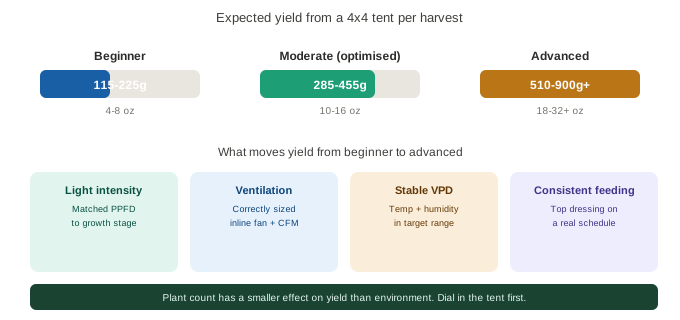
The factors that move yield from the beginner range to the advanced range are the same factors covered across our equipment guides: light intensity matched to growth stage, correctly sized ventilation, stable VPD, and consistent feeding. Plant count has a smaller effect on total yield than most beginners assume. Dialling in the environment has a larger one.
How to Decide: A Practical Framework
If this is your first grow, choose 4 plants with topping or LST. This gives you room to learn plant training without overcrowding, leaves space for airflow between plants, and produces a moderate yield in the 10 to 16 ounce range with reasonable equipment.
Four plants is also forgiving if one plant underperforms or has to be removed due to pests or hermaphroditism, since you still have three productive plants rather than losing a quarter of a SOG setup’s density advantage.
If you want to run autoflowers on a continuous cycle, consider SOG with 8 to 12 small pots. Autoflowers’ fixed lifecycle means a SOG setup can be staggered, with some plants in early flower while others are closer to harvest, producing a more continuous output than a single synchronised batch of larger plants.
If you want maximum yield from minimum plant count and do not mind the extra setup work, ScrOG with 4 plants is the highest per-plant efficiency option. This requires the most hands-on training but produces the densest, most even canopy for the light intensity targets in flower.
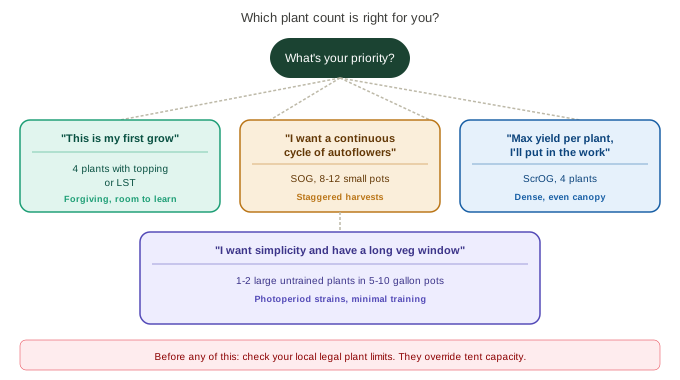
If simplicity is the priority and you have a long veg period available, 1 to 2 large plants in big pots is entirely workable, particularly for photoperiod strains where extended veg builds the structure that would otherwise come from training multiple smaller plants.
FAQ
Can I really fit 16 plants in a 4×4 tent? Technically yes, with a Sea of Green setup using very small pots and minimal per-plant space (around 0.25 to 1 square foot each). In practice, 16 plants requires precise environmental control, since that many root systems and that much leaf surface area dramatically increases humidity and heat load. Most home growers find 8 to 12 a more manageable upper limit even within a SOG approach.
Is more plants always more yield? No. Total yield is more closely tied to total canopy coverage and root volume than to plant count. Cramming more plants into the same 16 square feet without increasing total pot volume or canopy space generally redistributes yield across more, smaller plants rather than increasing the total.
What is the easiest plant count for a beginner? 4 plants with topping or low-stress training. This balances manageable individual plant size, adequate airflow between plants, and a moderate yield without requiring advanced techniques like ScrOG.
Do autoflowers and photoperiod strains need different plant counts in a 4×4? Autoflowers’ compressed lifecycle and smaller typical size make higher plant counts (6 to 12) more practical, often in a SOG-style layout. Photoperiod strains benefit from a longer veg period during which fewer plants (4 to 6) can be trained to fill the same space with larger individual structures.
How does plant count affect ventilation requirements? More plants mean more total leaf surface area transpiring moisture into the tent, which raises humidity and CO2 demand. Use the grow tent ventilation calculator to confirm your inline fan is sized for your tent’s volume regardless of plant count, then rely on your oscillating fans and humidity controller to manage the increased moisture load from a denser canopy.