
Quick Answer: Yes, it’s cheaper to grow your own cannabis than buying from a dispensary in almost every realistic scenario. After the first harvest, home-grown flower costs roughly $25 to $50 per ounce to produce versus $150 to $300 at a dispensary. The upfront setup cost for a basic 4×4 indoor grow runs $300 to $700 and pays itself back within one to two harvests. The longer you grow, the wider that gap gets.
The first time I did this calculation properly, I sat with my phone and a receipt from a dispensary run I had done the week before. One ounce of mid-tier flower, nothing special, $210 after tax. I had spent roughly that same amount on my entire nutrient supply for the current grow, which was going to yield somewhere between six and eight ounces. The numbers did not require much analysis. I just needed to see them next to each other.
For a lot of people, the cost question is what finally tips them toward building a setup. They have been curious for a while, maybe a little intimidated by the equipment lists, but the moment they genuinely crunch what they spend at a dispensary every month and compare it to what a basic grow costs to run, the decision tends to make itself.
This breakdown gives you the real numbers, not the optimistic headline figures. Setup costs, ongoing costs, realistic yields, and exactly when a home grow pays for itself.
Table of Contents
What Dispensary Cannabis Actually Costs
Dispensary prices are all over the place depending on where you live, and that variation is mostly driven by tax policy rather than product quality. In mature markets like Oregon and Michigan, competition and oversupply have driven ounce prices down to $84 in Michigan and $210 in Oregon. Taxes are the silent killer. Cannabis excise tax rates vary wildly by state, from 6% in Missouri to 37% in Washington, and most states stack state sales tax on top of that. In California, the combined tax burden can exceed 30% of the retail price.
If you are a regular consumer buying an ounce a month at a fairly conservative average of $250, that is $3,000 a year. Two ounces a month puts you at $6,000. Those numbers get uncomfortable fast when you write them down.
The other thing dispensary pricing does not show you is what it costs per gram once you factor in the taxes, the packaging markup, and the retailer margin. In legal markets such as the United States and Canada, dispensary prices typically range from $5 to $20 per gram. A home grow, once the setup is paid off, produces flower at a fraction of that.
The Setup Cost
This is where most cost breakdowns either scare people off with a premium setup or undersell the real minimum. The truth sits in the middle.
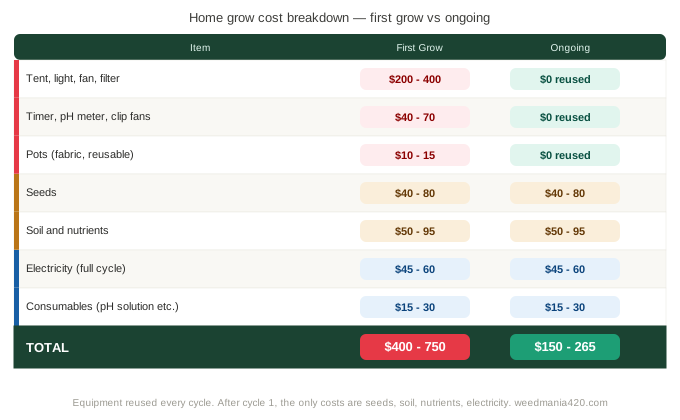
A basic, functional 4×4 indoor grow needs the following:
Grow tent: A quality 4×4 tent runs $60 to $120. The tent itself is reusable across every grow you ever do from that point, so amortise this cost across multiple cycles.
LED grow light: A reliable LED in the 200 to 300W range for a 4×4 runs $80 to $200. Cheaper than HPS to run, lasts longer, and produces comparable results when PPFD targets are dialled in correctly. This is your biggest one-time cost and the one most worth spending correctly on.
Inline fan and carbon filter: A correctly sized inline fan and a carbon filter combo for a 4×4 runs $60 to $120. Use the grow tent ventilation calculator to confirm you are buying the right CFM rating for your specific space.
Clip fans: Two clip fans for internal circulation, $15 to $30 total. More detail in the oscillating fans guide.
Pots and soil: Four 5-gallon fabric pots at $2 to $3 each and a bag of quality cannabis-specific soil runs $25 to $50.
Timer: A basic digital light timer runs $12 to $18. Full breakdown in the grow light timer guide.
pH meter: Non-negotiable. A reliable pH pen runs $15 to $35. Detail in the pH meter guide.
Seeds: Four quality feminised seeds from a reputable source like ILGM run $40 to $80 for a four-pack depending on the strain.
Nutrients: A basic three-part nutrient line for a full grow runs $30 to $60.
Total setup cost, first grow: $340 to $730.
That range is real. You can build a functional setup at the low end of it, and you can spend more than the high end if you want automated controllers, a humidity monitor, a VPD controller, and rope ratchet hangers from the start. It is possible to set up a basic indoor cannabis garden for less than $500, though you can spend much more on advanced equipment and larger setups.
Ongoing Costs
Once the tent and light and fan are bought, most of them last for years. What you spend every cycle after that is significantly smaller.
Seeds: $40 to $80 per cycle, unless you clone, in which case effectively zero.
Nutrients: $20 to $50 per grow. Less if you switch to a top dressing programme where amendments like worm castings, bone meal, and langbeinite replace most bottled inputs.
Electricity: This one surprises people who assume LEDs are free to run. A 250W LED running 18 hours a day through a ten-week grow uses roughly 315 kWh. At the US average residential electricity rate of around $0.16 per kWh in 2026, that works out to about $50 per grow. Higher in states with expensive electricity, lower in states where it is cheap.
Miscellaneous consumables: pH up and down solution, new coco or soil top-up, humidity packs for curing jars, the occasional replacement part. Budget $15 to $30 per grow.
Total ongoing cost per grow: $125 to $210.
What a Realistic Yield Looks Like
This is the variable most beginners get wrong in their projections, usually because they use the optimistic yield figures from seed bank marketing rather than realistic first-grow numbers.
Cannabis grown indoors typically yields about a quarter-pound, or three ounces, for a beginner grow. At a dispensary, the average cost of three ounces of good-quality cannabis is almost $1,000.
A more experienced grower with a dialled-in environment and trained plants in a 4×4 tent can realistically expect six to eight ounces per harvest. Some well-optimised setups push higher than that. If you harvest 8 ounces from just one plant, you could save over $1,000 compared to buying the same amount from a dispensary.
The honest beginner projection: three to four ounces per harvest. At $200 per ounce retail, that is $600 to $800 worth of flower from a grow cycle that cost you $125 to $210 in ongoing inputs after the setup was paid for. Even the conservative yield scenario is a strong financial argument once you clear the first cycle.
The Break-Even Point
At a setup cost of $500 (mid-range) and ongoing costs of $165 per grow, with a conservative yield of four ounces at $200 retail value per ounce:
First harvest value: $800 First harvest cost (setup + ongoing): $665 First harvest net saving: $135
By the second harvest, setup costs are gone and ongoing costs drop to $165. Four ounces at $200 retail generates $800 of value against $165 in costs. Net saving per harvest from cycle two onward: $635.
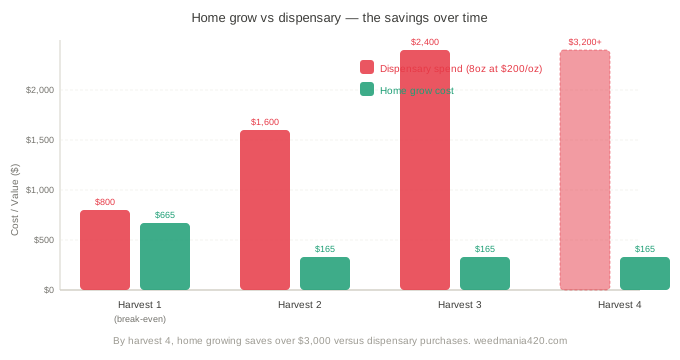
For frequent cannabis consumers, growing even a few plants can reduce yearly spending significantly. Two harvests a year at those numbers saves $1,270. Four harvests a year (achievable with autoflowers on a fast cycle) saves $2,540 against what the same volume would cost at a dispensary.
Where the Savings Really Stack Up Over Time
The compounding advantage of home growing is not just the cost per gram. It is that your equipment cost keeps spreading thinner across every subsequent harvest while dispensary prices keep rising with inflation and tax adjustments.
The numbers get even better after the first grow cycle since reusable equipment like grow tents, LED lights, inline fans, and fabric pots are already paid for. Future harvests usually become much cheaper once the core setup is sitting there ready to go.
There is also a quality dimension that the pure cost numbers do not capture. Unlike dispensary purchases, you know exactly what went into your plant. No mystery pesticides, no questionable flush, no shortcuts in the curing process. You grew it. You cured it. You know what you are smoking.
After a few grows, many people find they prefer their own flower to what they were buying before. And this’s not because home growing is automatically better, but because they get to control every variable: the genetics, the soil, the terpene-preserving cure, and the harvest timing. That control is worth something over and above the dollar saving.
When Growing Is NOT Cheaper
There are genuine scenarios where the calculation tilts the other way. Worth naming them honestly.
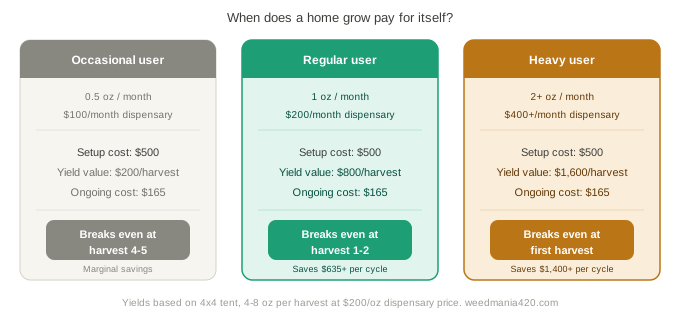
You only consume occasionally. If you buy half an ounce every three months, a $500 setup takes years to pay back compared to just buying that small volume at retail. Home growing makes the most financial sense for regular consumers, not occasional ones.
Your first grow fails. Though growing cannabis yourself is much cheaper than buying it from a dispensary, you will only save money if your plants produce. Many cannabis plant cultivars are relatively easy to grow, but there is a learning curve. A failed first grow does not break the economics permanently, but it delays break-even by a cycle. The best insurance against a failed first grow is the right genetics. Autoflower strains like Northern Lights Auto and White Widow Auto from ILGM are specifically bred for beginner-friendliness, with strong germination rates and a built-in germination guarantee that replaces seeds that do not sprout.
You keep upgrading your setup. That progression is pretty common in cannabis cultivation. Somebody buys a small tent, gets hooked after their first harvest, then suddenly starts researching better LEDs, larger grow spaces, automated irrigation, and drying room upgrades six months later. Upgrading is fine, but it can delay the point where your cumulative investment is recovered if you keep reinvesting yield savings back into equipment rather than treating the savings as actual savings.
You live somewhere where home growing is illegal. This is the non-negotiable override on every other calculation. Personal cultivation for recreational use is permitted in 20 of the 24 states that have legalized adult-use cannabis. A few states, like Delaware, Illinois, New Jersey, and Washington, have legalized possession but still ban home growing. Check your local laws before any of these numbers are relevant to you.
A Real Cost Summary Table
| Item | First Grow | Subsequent Grows |
| Tent, light, fan, filter | $200-400 | $0 (reused) |
| Timer, pH meter, clips | $40-70 | $0 (reused) |
| Pots (fabric, reusable) | $10-15 | $0 (reused) |
| Seeds | $40-80 | $40-80 |
| Soil or coco | $20-35 | $20-35 |
| Nutrients | $30-60 | $30-60 |
| Electricity (10-week grow) | $45-60 | $45-60 |
| Consumables | $15-30 | $15-30 |
| Total | $400-750 | $150-265 |
| Realistic yield (beginner, 4×4) | 3-4 oz | 4-8 oz |
| Dispensary value of yield | $600-800 | $800-1,600 |
FAQ
How long does a first indoor grow take before harvest? From seed to harvest, a typical photoperiod strain takes 14 to 20 weeks including veg time. Autoflowers run faster at 10 to 12 weeks from seed to harvest, which is why many first-time growers start with an auto. Faster cycle means faster break-even.
Does home-grown cannabis taste as good as dispensary flower? It can, and with a proper slow cure it often does. The biggest variable is curing. Flower that is dried slowly at 60 to 65% RH for three to four weeks in sealed jars develops the full terpene character the genetics are capable of. Rushed drying produces harsh, flat-tasting flower regardless of how well the grow went.
What is the cheapest possible setup that still produces decent results? A starter kit costs as little as $80 and can give you a nice start. A more realistic functional minimum for a grow that produces consistent results in a 2×2 tent with a quality LED runs around $200 to $300 all-in. See our 2×2 tent setup guide for a full beginner build at the lower end of the budget range.
How much electricity does a home grow use? A 250W LED on an 18/6 schedule through a ten-week veg and twelve-week flower grow uses roughly 400 to 500 kWh total. At the US average of $0.16 per kWh that is $65 to $80 for the full cycle. Switching to a 12/12 schedule at the flip and running LEDs rather than HPS keeps electricity costs at the lower end of that range.
Is outdoor growing even cheaper? Significantly, yes. Setting up an outdoor cannabis grow can cost anywhere from $0 to a couple of hundred dollars. An average outdoor-grown cannabis plant can yield about a half-pound of flower, or 8 ounces. If your climate and legal situation allow it, outdoor growing makes the financial case even stronger, since sunlight is free. The trade-off is less control over environment, schedule, and security.