
Quick Answer: Coco coir is a coconut husk fibre that acts as a hydroponic-style growing medium in a pot. It is inert, which means it holds zero nutrients on its own. You add everything through every watering. Target pH 5.5 to 6.5, always add CalMag, water to 10 to 20% runoff, and never let it dry out completely. Get those four things right and coco outperforms soil on speed, root development, and yield.
My first coco grow nearly ended in week two. Not because coco is hard. Because I treated it like soil.
I watered every three days the way I always had, skipped CalMag because I did not understand why it mattered, and watched the plants develop the kind of mottled yellowing between the veins that looks like five different problems at once. It was one problem. Magnesium deficiency, caused by the coco stripping it out of every feeding I gave before the roots could absorb it.
Once I understood what coco actually does, the fix was simple. But nobody had told me the key thing upfront: coco coir is not soil. It behaves more like a hydroponic system than a garden bed, and the moment you start treating it that way, everything clicks.
Disclosure: This post contains affiliate links. Purchases through our links may earn us a small commission at no extra cost to you. We only recommend products we have genuinely researched and believe in.
Table of Contents
What Is Coco Coir?
Coco coir is a byproduct of coconut processing, made from the fibrous husks between the hard shell and the outer coat of the coconut. Manufactured mainly in Sri Lanka and India, it is processed, dried, and compressed into bricks or sold loose in bags.
It is pH neutral and completely inert. The only nutrients in the medium will be the ones you add. That is the core property that makes coco different from soil and that drives every decision in a coco grow.
The medium holds water well, drains quickly, and stays airy even when saturated. Those three properties together produce the environment cannabis roots love most: consistent moisture with plenty of oxygen at the root zone.
Because of this, coco coir is sometimes called a hydroponic medium in a pot.
Coco vs Soil
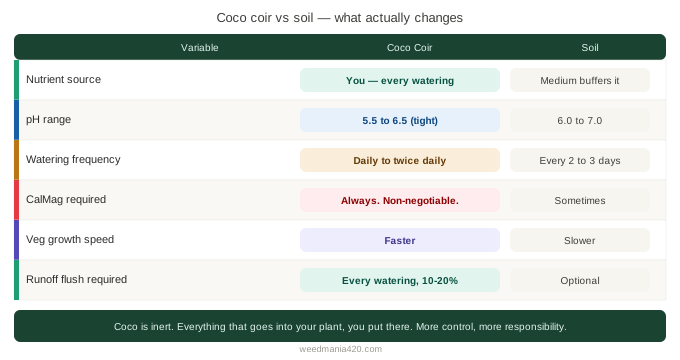
In soil, the growing medium buffers pH, holds nutrients, and releases them gradually. The soil does a lot of work on your behalf.
In coco, none of that happens. Coco coir has no buffering capacity and holds no nutrients. Every watering must deliver a complete nutrient solution. There are no plain water days in coco except an optional weekly flush to reset salt levels.
That sounds like more work. In practice it is more control. You know exactly what went into your plants at every stage, and you can course-correct fast because changes in the root zone show up in plant behaviour within days rather than weeks.
Coco also grows faster. The combination of consistent moisture, high oxygen availability, and frequent feeding accelerates vegetative growth noticeably compared to soil. Your first run in coco might match your soil yields.
By your third run, you will wonder why you did not switch sooner.
From Seed to Smoke, Done Right
The Only Grow Guide You’ll Actually Need
This article covers coco coir. The Complete Marijuana Grower’s Guide covers all of it, from choosing the right seeds through harvest, drying, and a proper cure.
Seeds, lighting, nutrients, pest control, common mistakes, legal considerations by region, and troubleshooting. Everything a beginner needs to take a seed to frosty, sticky, finished bud, in one practical guide.
Get the Full Grower’s Guide →The Coco CalMag Problem
Coco coir naturally binds to calcium and magnesium ions. This is the single most important thing to understand before your first coco grow.
It happens through cation exchange. Fresh coco holds onto calcium and magnesium from your nutrient solution before the roots can access them. The result is that even a perfectly formulated nutrient feed can leave your plants calcium and magnesium deficient within weeks.
Skipping CalMag is the most common cause of mystery deficiencies in first coco grows. It is not optional. Add CalMag at the bottle’s recommended rate, typically 2 to 5 mL per gallon, from week one, before any symptoms appear.
If you are using RO water, CalMag is even more critical since RO water has no baseline mineral content at all.
Research compiled from cannabis nutrition studies suggests optimal calcium levels of 100 to 110 ppm and magnesium at 35 to 70 ppm throughout the grow cycle. You cannot hit those numbers in coco without supplemental CalMag. Do not try.
Buffered vs Unbuffered Coco: Which One to Buy?
Raw coco coir contains residual sodium and potassium from the coconut. Unbuffered coco releases those salts into your root zone and causes early deficiency and pH instability.
Buffering coco means pre-soaking it in a pH-adjusted CalMag solution to displace the sodium and potassium with calcium and magnesium before you plant into it. Pre-buffered coco has already been through this process at the factory and is ready to plant into immediately.
For beginners, buy pre-buffered coco. Brands like Canna Coco Professional Plus and Mother Earth Coco come pre-buffered and save you a meaningful setup step. If you buy unbuffered coco, the buffering process takes about 30 minutes and requires a CalMag solution at pH 5.8.
The Right Mix of Coco and Perlite
Straight coco holds water well, sometimes too well for some setups. Adding perlite improves drainage and aeration further.
A 70/30 coco to perlite ratio suits most cannabis grows. This keeps enough moisture for consistent feeding while allowing faster dry-backs between waterings. If you are in a humid environment or your tent runs warm, a 60/40 mix dries back faster and reduces root rot risk.
A 50/50 mix suits growers who are away from the tent for long periods and cannot water frequently, though it reduces the aeration advantage that makes coco faster than soil.
Step by Step Setting Up Process
Growing in coco is easy, and so is the set up process. Here’s how to set up for success.
Step 1. If your coco is a compressed brick, add 1 litre of water per kilogram of dry coco and allow it to expand fully. This takes 20 to 30 minutes.
Step 2. If the coco is unbuffered, prepare a CalMag solution at pH 5.8 and soak the expanded coco through it until the runoff runs clear. Allow it to drain until the medium feels wet and airy rather than waterlogged.
Step 3. Mix in perlite at your chosen ratio.
Step 4. Fill your pots. Lift each pot to confirm no water drips from the base. Coco that is too saturated at planting stresses seedling roots before they establish.
Step 5. Use fabric pots if you can. Fabric pots promote air-pruned, fibrous root systems that take advantage of coco’s aeration properties better than plastic pots do. For more on pot selection see the fabric pot guide.
Get The pH in Coco Right
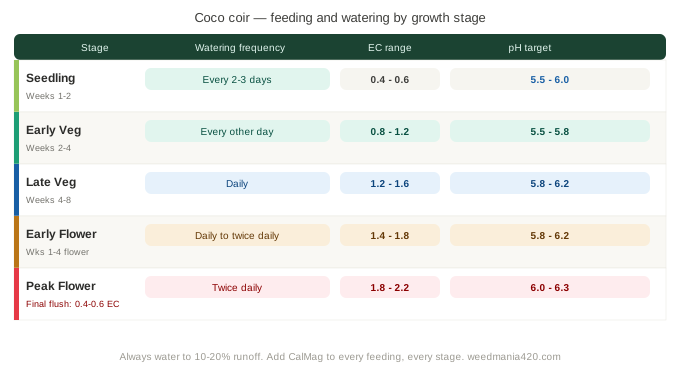
Coco coir target pH sits between 5.5 and 6.5, with the sweet spot between 5.8 and 6.2. During veg, lean toward 5.5 to 5.8. During flower, 6.0 to 6.3 allows better phosphorus and potassium uptake.
Unlike soil, coco does not buffer pH. If your input solution is off, your plants feel it quickly. Always pH your nutrient solution after mixing all components, because adding nutrients changes the pH of the water.
A useful technique for experienced coco growers: let pH drift slightly within the range over multiple feedings, alternating between 5.7 and 6.1 across successive waterings. Different nutrients unlock at different pH points, and deliberately cycling through the range ensures your plants access the full spectrum of what you are feeding them.
Get a reliable pH meter before you start. There is no reliable workaround. The pH meter guide covers the best options under $30 and under $100.
How to Water Cannabis Plants in Coco
The single biggest mistake new coco growers make is treating it like soil. In coco, more frequent watering equals faster growth.
Coco should stay consistently moist, not soaking wet, but never dry. Coco that dries out completely becomes hydrophobic and creates dry pockets in the root zone that roots cannot penetrate.
Seedlings: every 2 to 3 days, or when the top inch feels dry. Seedlings do not require any mineralised nutrition for the first few weeks. Do not oversaturate early. It is easy to stress a young taproot that is still establishing itself.
Veg: daily or every other day. Larger plants in warm tents may need twice daily.
Flower: once to twice daily, sometimes more in peak flower with large plants or warm conditions.
Always water to 10 to 20% runoff. This is not just about wetting the medium, it flushes accumulated salts that build between feedings and prevents nutrient lockout. Empty the runoff tray immediately. Pots that sit in standing water wick it back into the medium and create ideal conditions for fungus gnats.
How to Feed Feed in Coco
In coco, you feed with every watering. The medium holds no nutrients, so each irrigation must deliver a complete nutrient solution. This is called fertigation.
There are no plain water days. The exception is an optional weekly flush with pH-balanced water at 50% nutrient strength to reset salt levels in the medium.
Use a coco-specific nutrient line. Canna Coco A+B is the community standard. General Hydroponics FloraSeries works well in coco. Advanced Nutrients Sensi Coco is formulated specifically for the medium’s calcium binding behaviour.
Always add CalMag first, then the rest of the nutrient solution, then pH-adjust at the end. Mixing order matters in coco feeding.
A simple EC guide for coco by stage:
- Seedling: 0.4 to 0.6 EC
- Early veg: 0.8 to 1.2 EC
- Mid to late veg: 1.2 to 1.6 EC
- Early flower: 1.4 to 1.8 EC
- Peak flower: 1.8 to 2.2 EC
- Final flush: 0.4 to 0.6 EC (plain pH water)
Monitor runoff EC as well as input EC. If runoff EC is significantly higher than input, salt is accumulating in the medium. Flush until runoff EC drops to within 0.2 of input before resuming regular feeding.
Nutrients for Coco
When it comes to nutrients, you have to play close attention. Unlike soil, coco doesn’t hold nutrients, thus any slight misses in the feeding schedule can have long-term devastating effects. That’s one of the things I had to learn painfully before I could run a successful grow in coco. Here the nutrients you can bank on:
Our Pick
Canna Coco A+B
The community standard for coco feeding. Two-part base nutrient designed specifically for coco’s calcium binding behaviour. Consistent results across multiple cycles.
Check Price on Amazon →Also Consider
General Hydroponics CalMag
Non-negotiable in coco. Add at 2 to 5 mL per gallon with every feeding from week one. This is basic coco chemistry, not a marketing upsell.
Check Price on Amazon →Common Problems in Coco and How to Fix Them
Yellowing between leaf veins (interveinal chlorosis). Almost always calcium or magnesium deficiency in coco. Increase CalMag before suspecting anything else. Check that pH is within 5.5 to 6.5 range so calcium and magnesium are available for uptake.
Dark green leaves with clawing tips. Too much nitrogen, often in early flower. Reduce N in your feeding mix and check that you have transitioned to a bloom-focused nutrient ratio.
Burnt leaf edges despite correct pH. Salt accumulation in the medium. Flush with 50% strength solution until runoff EC drops. Then resume at a reduced input EC.
Wilting despite wet coco. Root zone issue. Either overwatering that has displaced oxygen from the medium, or root rot from pots sitting in standing water. Add more perlite next run. Always empty runoff trays.
Medium drying unevenly. Common when coco was not properly saturated at setup, creating dry pockets that become hydrophobic. Water more slowly and allow more time for the solution to penetrate before moving to the next pot.
VPD and Environment in Coco Grows
Coco’s faster drying rate means your tent environment directly affects watering frequency more than it does in soil.
Higher VPD drives faster transpiration, which dries coco faster, which means you need to water more frequently. Lower VPD reduces transpiration, slows dry-back, and can create the conditions for overwatering if you maintain a soil-based watering schedule.
Managing VPD in coco is more critical than in soil for this reason. Target 0.8 to 1.0 kPa in veg and 1.2 to 1.5 kPa in flower to keep transpiration rates aligned with a realistic watering schedule. The full target table is in the VPD chart guide.
Flushing Before Harvest
Flush coco with pH-balanced water at 3 to 5 times the container volume over 7 to 14 days before harvest. A 5-gallon pot needs 15 to 25 litres of flush water to properly clear accumulated salts from the medium.
Coco holds salt more readily than soil, so flushing matters more here than in soil grow. Thorough flushing produces cleaner tasting, smoother finished flower.
Reusing Coco
Coco is reusable for 3 to 4 cycles if treated correctly between runs.
Remove root mass by hand, then soak in an enzymatic solution like Cannazym or Hygrozyme for 24 hours to break down remaining root material. Flush with 3 times the medium volume in clean water, then rebuffer with CalMag solution at 3 mL per gallon.
Let it sit for 12 hours. Flush once more and confirm runoff EC is below 0.4 before replanting.
After 3 to 4 cycles, fibre breaks down and water retention increases noticeably. That is the signal to replace the medium.
From Seed to Smoke, Done Right
The Only Grow Guide You’ll Actually Need
This article covers coco coir. The Complete Marijuana Grower’s Guide covers all of it, from choosing the right seeds through harvest, drying, and a proper cure.
Seeds, lighting, nutrients, pest control, common mistakes, legal considerations by region, and troubleshooting. Everything a beginner needs to take a seed to frosty, sticky, finished bud, in one practical guide.
Get the Full Grower’s Guide →FAQ
Is coco coir good for beginner cannabis growers? Yes, with the right preparation. Coco is more forgiving than other hydroponic methods while delivering faster growth than soil. The learning curve is understanding that it is inert and requires CalMag from day one. Get those two points right and coco is genuinely beginner-friendly.
What pH should I use for coco coir cannabis? Target 5.5 to 6.5 overall, with 5.8 to 6.2 as the practical sweet spot. Lean toward 5.5 to 5.8 in veg and 6.0 to 6.3 in flower. Unlike soil, coco does not buffer pH, so precision matters more here.
Can I use soil nutrients in coco? Yes, but coco-specific nutrients are formulated to account for the medium’s calcium binding behaviour. Soil nutrients can work but may require more CalMag supplementation than their label suggests. Hydroponic nutrient lines work better than soil-specific ones in coco.
How often should I water coco coir cannabis plants? Every 2 to 3 days for seedlings, daily or every other day in veg, once to twice daily in peak flower. Never let coco dry completely. The goal is consistently moist, never waterlogged, never bone dry.
Do I need to flush coco before harvest? Yes. Flush with pH-balanced water at 3 to 5 times the container volume over 7 to 14 days before harvest. Coco accumulates salts more readily than soil, and a proper flush improves the taste and smoothness of the finished flower significantly.